Services · Know what goes into everything you make
Material traceability, cutting and remnant management
Every plate, cut and offcut accounted for
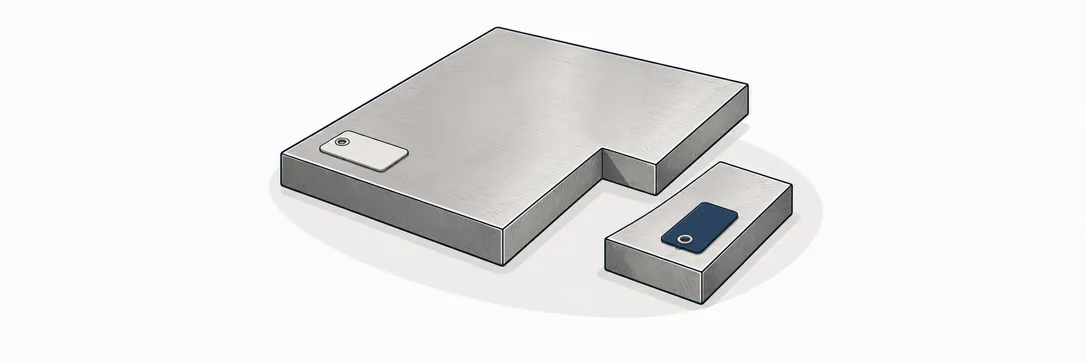
We track cut material piece by piece: each plate or section carries its dimensions, every cut records what was used and what usable remnant was kept, weights are derived from geometry, remnants go back into stock and are matched to the next job, and each used piece is costed by weight.
Who it's for: Fabricators and manufacturers who re-buy plate they already have as offcuts, because nobody can find a remnant of the right size when the next job needs it.
Try it yourself
- Boiler manufacturing demo Sign in as Production for cutting, or Stores for remnants
Sample company. Free. Resets every night.
How it works
- 01 Each plate or section is stored as a piece with its own dimensions.
- 02 At each cut, the operator records what was used and the usable remnant; weights are worked out from the geometry.
- 03 Remnants go back into stock and are matched to waiting bill-of-materials lines before anything is bought.
- 04 Each used piece is costed by its share of the source piece's weight.
The numbers
- Live cut test
- 157.00 kg → 127.17 used + 15.70 remnant + 14.13 scrap
- Weights typed by the operator
- None — derived from dimensions and density
- Built for
- A boiler and pressure-vessel manufacturer
What to require from any vendor for this: 3 lines on the ERP requirements checklist, each with the test to ask for in a demo.
Questions buyers ask
- Do operators weigh every piece?
- No. Weight comes from dimensions and density, so used, remnant and scrap always add back up to the source.
- Can offcuts be used again instead of buying new plate?
- Yes. Each offcut is matched against BOM lines still waiting for material, least waste first. Only the shortfall goes to Procurement to buy.
- Can a part be traced back to its plate?
- Yes. Every cut piece is linked to the piece it was cut from.
How it works, in detail
Built for
- A boiler and pressure-vessel manufacturer — Boiler and pressure-vessel manufacturing
Next in know what goes into everything you make
A BOM built from your own Excel sheets that learns your categories
Talk to us about your systems.
Tell us what's held together with workarounds right now. We reply to every message ourselves.