Post-weld heat treatment requirements (UCS-56)
ASME Section VIII Division 1 requires post-weld heat treatment (PWHT) by material and thickness: Table UCS-56-1 sets, for each P-number, the minimum holding temperature, the time per inch of thickness and when it can be skipped. For P-No. 1 carbon steel, PWHT is generally required above 1½ in (38 mm), held at 1,100 °F (595 °C) or more, and some services need it at any thickness.
Pujan Motiwala · Written to the ASME BPVC 2025 Edition · checked against ASME's and the National Board's public pages on
Video chapters (10)
- 0:00ASME PWHT Overview: Material, Thickness & Table UCS-56-1
- 0:20Why Heat Treat After Welding? Residual Stress & Hard Zones
- 0:42Table UCS-56-1 (P-No. 1): 1,100 °F Hold, Time/Inch & 1.25 / 1.5 in Exemptions
- 1:02Mandatory Any-Thickness Triggers: UW-2 Lethal, Wet H2S, UHA, PW-39 & IBR
- 1:22Worked 1.5 in & 3 in Examples + UCS-56(d) Ramp Rates Above 800 °F
- 1:44Furnace vs. Local Bands (UW-40), Thermocouple Charts & QW-407 PQR Rule
- 2:04Official BPVC 2025 Citations (Sec VIII Div. 1, Sec IX, UCS-56 & QW-407)
- 2:26Logging PWHT Basis, Charts & WPS Status in Boiler ERP Packages
- 2:462025 Edition Notice & Authorized Inspector Verification
- 3:00Next Steps: Heat Exchangers (S33), Impact Testing (S31) & Section IX (S09)
When is post-weld heat treatment required by ASME?
For Section VIII Division 1 carbon and low-alloy steel vessels, PWHT is required by P-number and thickness under Table UCS-56-1, and by service whatever the thickness in some cases. The table gives, for each P-number, the minimum holding temperature, the minimum time at temperature by thickness, and the conditions under which PWHT may be omitted; its notes carry most of the detail. The Code text is ASME's and paid; this guide outlines the 2025 rules and your copy of UCS-56 is the authority.
Why heat treat after welding?
Welding leaves high residual stresses and hard zones beside the weld. PWHT (stress relieving) heats the part below its transformation temperature and holds it there, which relaxes the stresses and tempers the hard zones. It improves toughness and resistance to some kinds of cracking, at the cost of furnace time and, sometimes, strength.
What are the PWHT requirements for carbon steel?
For P-No. 1, the commonest case, Table UCS-56-1 sets in outline:
| Item | Requirement |
|---|---|
| Minimum holding temperature | 1,100 °F (595 °C) |
| Holding time, up to 2 in (50 mm) thick | 1 hour per inch, at least 15 minutes |
| Holding time, over 2 in (50 mm) | 2 hours plus 15 minutes for each inch over 2 in |
| Exemption by thickness | Not mandatory up to 1¼ in (32 mm) nominal thickness, and up to 1½ in (38 mm) with a minimum preheat of 200 °F (95 °C), subject to the table's notes |
Other P-numbers have their own temperatures and much narrower exemptions; chromium–molybdenum steels (P-No. 4, 5A) nearly always need it.
When is PWHT required whatever the thickness?
- Lethal service: Division 1 requires PWHT of carbon and low-alloy steel vessels in lethal service (UW-2).
- Low temperature: some impact-test exemptions depend on it; see impact testing.
- The owner's specification: caustic, amine, wet H₂S and similar services often call for PWHT to resist stress-corrosion cracking, beyond the Code minimum.
Can you show a worked example?
A 1½ in (38 mm) P-No. 1 shell that needs PWHT (no preheat credit taken): hold at no less than 1,100 °F for 1.5 hours. Above 800 °F (425 °C), UCS-56(d) limits the heating rate to 400 °F per hour divided by the thickness in inches, so 400 / 1.5 = 267 °F/h at most, and the cooling rate to 500 °F per hour divided by the thickness, so 500 / 1.5 = 333 °F/h, each with an overall cap. A 3 in shell holds for 2 h 15 min, with heating at no more than 133 °F/h.
How is PWHT done and recorded?
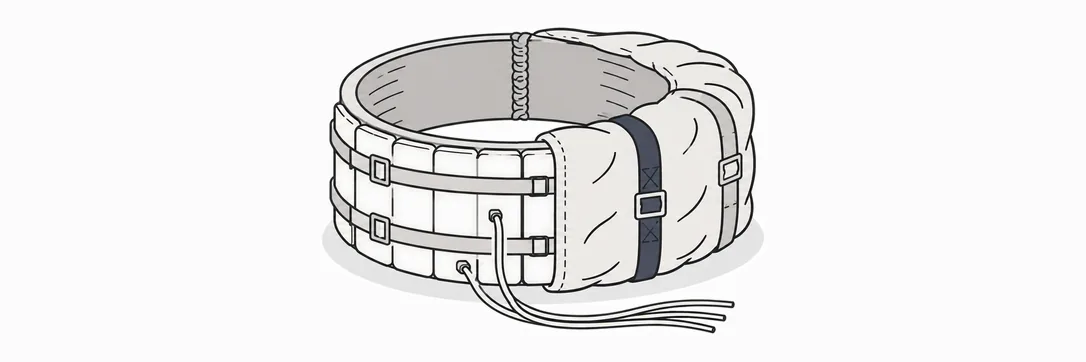
In a furnace (whole vessel or in sections) or locally around a weld band, under UW-40's rules. Temperatures are recorded by thermocouples on the part, and the chart showing heating rate, hold temperature and time, and cooling rate is part of the vessel's record. PWHT is declared on the data report.
Does PWHT change the welding procedure?
Yes. Adding or removing PWHT, or changing its temperature and time range, is a procedure essential variable in Section IX (QW-407), so the WPS must be supported by a PQR heat treated the same way. Section IX is the Code's section that ASME says "contains rules relating to the qualification of welding, brazing, and fusing procedures as required by other BPVC sections". See essential variables.
What about Section I boilers?
Section I has its own PWHT table (PW-39) with its own thickness exemptions. A boiler shop and a vessel shop working the same steel can therefore have different PWHT triggers on the same day.
When does UCS-56 apply?
To carbon and low-alloy steel parts of Section VIII Division 1 vessels, the Division ASME describes as covering "pressure vessels operating over 15 psig, fired/unfired". High-alloy steels follow Part UHA.
How does this work under IBR in India?
IBR 2026 asks for heat treatment charts of welded drums with a boiler's registration documents; see boiler registration documents and ASME vs IBR 2026.
What does our software keep for PWHT?
Our US boiler demo records each job's PWHT decision with its basis (for example "P-No. 1 at ½ in nominal thickness, below 1½ in"), and the temperature, hold, rate and chart where it is done, and prints it in the ASME record package next to each WPS's PWHT condition. See ERP for boiler and pressure vessel shops.
Quoted from the official text (2)
“ASME BPVC Section VIII Division 1 provides design, fabrication, inspection, testing & certification rules for pressure vessels operating over 15 psig, fired/unfired.”
ASME Section VIII Division 1 product page, description
“Section IX of the BPVC contains rules relating to the qualification of welding, brazing, and fusing procedures as required by other BPVC sections.”
ASME Section IX product page, description
WPS and PQR registers, welder continuity, heat numbers from receipt to nameplate, and the data report package: the records a Code shop keeps, in one system.
A boiler manufacturer's system, from enquiry to dispatch and the IBR folder, with sample logins: try the live demo.
A boiler and pressure vessel shop's system, from inquiry to shipping and the ASME data report package, with sample logins: try the live demo. Fixed price, scope agreed before work starts: see the prices.
Official sources
- Boiler and Pressure Vessel Certification. ASME, November 1, 2026.
- BPVC Section VIII Division 1 (2025). ASME, July 1, 2025.
- BPVC Section IX: Welding, Brazing, and Fusing Qualifications (2025). ASME, July 1, 2025.
What this page is not
A guide written by Ahrom Labs, not engineering advice, and not yet reviewed by an Authorized Inspector. The ASME Code is copyrighted and sold by ASME: paragraphs are cited by number and explained in our own words, never reproduced. Check every figure against your copy of the 2025 Edition and with your Authorized Inspector before relying on it. Last updated .
Talk to us about your systems.
Tell us what's held together with workarounds right now. We reply to every message ourselves.